Cucumbers: Water Content, Nutrient Profile and Reported Benefits
08/04/2026 / By Coco Somers
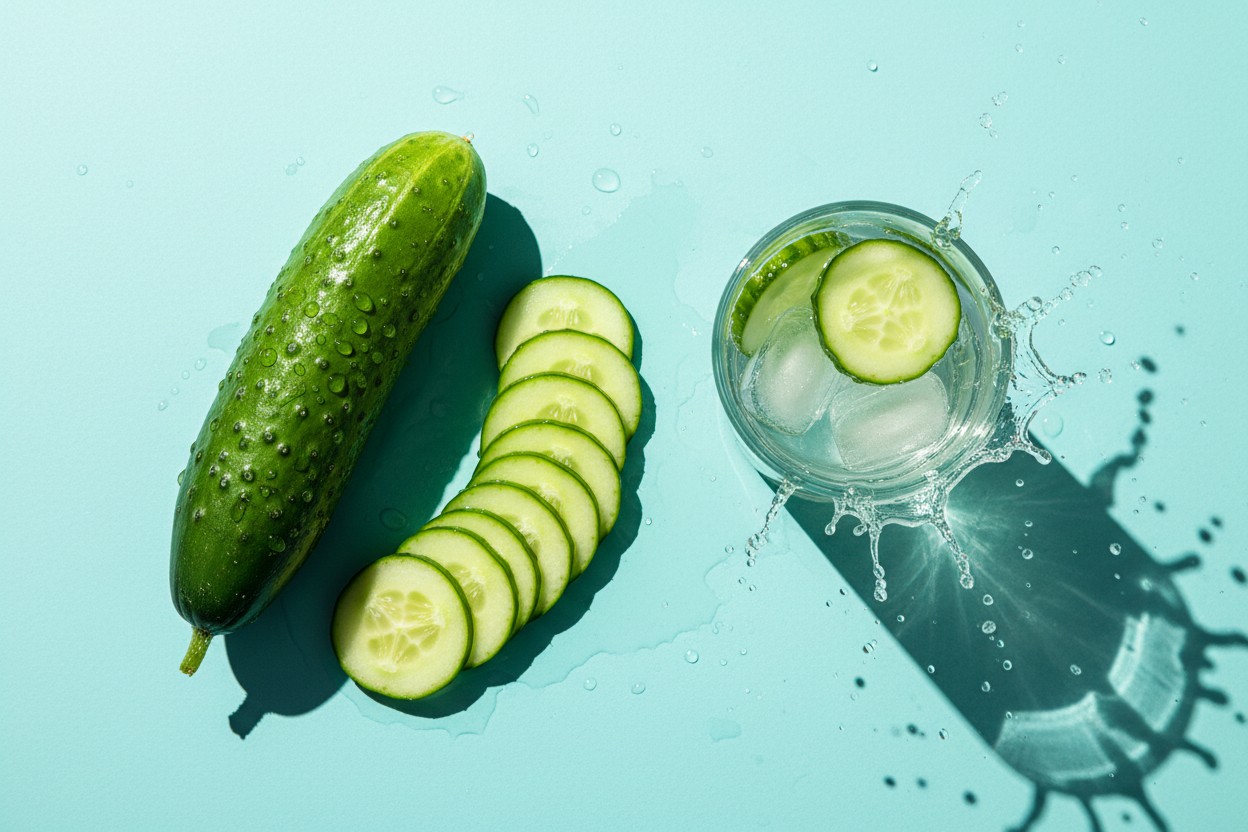
Cucumbers: Hydration and Nutrient Content
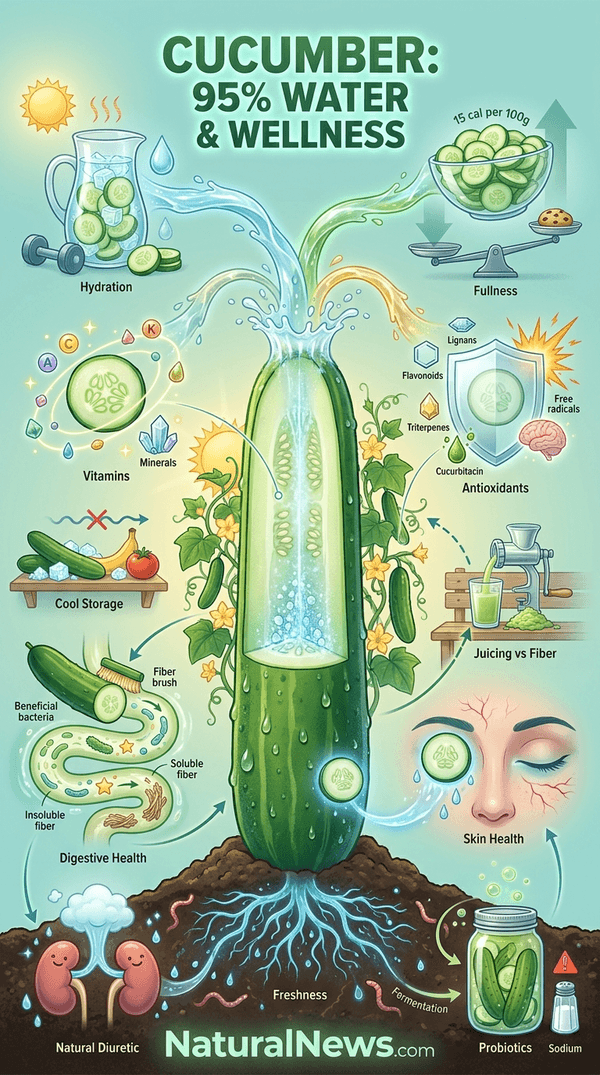
Cucumbers are composed of approximately 95% water, according to a report published May 4, 2026, by NaturalNews.com [1]. The report quoted nutritionist Jenna Hope as saying cucumbers contain minimal fat, carbohydrates, and sugar, with about 15 calories per 100 grams. The book ‘The 200 Superfoods That Will Save Your Life’ similarly states that cucumbers are more than 95% water and nearly 4% carbohydrate by weight, providing vitamins A, C, and K, folate and other B vitamins, carotenes, and the minerals calcium, potassium, and magnesium [2].
Nutrition experts highlight cucumbers’ role in hydration, digestion, stress reduction, and cognitive support, according to a report published October 31, 2025, by YourNews.com [3]. The report said cucumbers provide a natural way to support daily hydration while contributing essential nutrients, antioxidants, and gentle digestive benefits. A separate report said cucumber juice offers superior hydration because of its high water content and mild taste, though juicing removes most fiber, meaning juice does not significantly support gut health compared with eating whole vegetables [4].
Data cited in a December 2021 report show that an 11-ounce serving of unpeeled, raw cucumber contains 45 calories, 11 grams of carbohydrates, 2 grams of fiber, and 2 grams of protein [5]. Another report described cucumbers as 95% water and a rich source of vitamins, minerals, and antioxidants that support hydration, detoxification, and skin health [6].
Reported Skin Benefits
Reports describe cucumbers as beneficial to the skin. According to the book ‘Beauty From the Inside Out’, nutrients called antioxidants, such as vitamins A, C, E, zinc, and selenium, provide protection against free radicals and the damage created from too much exposure [7]. In ‘Radiant: The Cookbook’, Mafalda Pinto Leite wrote that vitamin K1 is found in vegetables and that vitamin K can help minimize spider veins, bruising, scars, and stretch marks [8].
Cucumber is also described as a natural diuretic. According to ‘Healing Through Nutrition’ by Eliza Savage, cucumbers act as a natural diuretic and can be used to fight bloat; the same book says pickles are a form of fermented cucumber and can be a good source of beneficial bacteria, or probiotics [9].
A September 2025 report stated that cucumbers are 95% water and a rich source of vitamins, minerals, and antioxidants that support hydration, detoxification, and skin health [6]. Cucumber juice also delivers anti-inflammatory compounds such as cucurbitacins, according to a January 2026 report [4].
Digestive Health Findings
Dietary fiber in cucumbers helps keep the digestive system moving, lowers cholesterol, and makes a person feel fuller longer, according to an October 30, 2025, report from NaturalNews.com [10]. The report said cucumbers bring an easy-to-eat source of both insoluble and soluble fiber.
Eliza Savage, in ‘Healing Through Nutrition’, wrote that the high water and low calorie content in cucumbers makes them a food for weight loss because a person can eat a large volume and feel more satiated; cucumbers also act as a natural diuretic and can be used to fight bloat [9].
A January 2026 report found that cucumber juice offers superior hydration but that juicing removes most fiber, so it doesn’t significantly support gut health compared with eating whole vegetables [4].
Absorption and Storage
Storage practices affect how long cucumbers remain usable. A February 26, 2026, report on storing produce said that with a few strategic storage techniques, consumers can dramatically extend the life and flavor of fresh produce, and that the secret lies in understanding the simple needs of each type of fruit and vegetable [11].
The same report noted that fruits and vegetables can wilt, mold, or soften too soon without proper storage [11]. Reports also indicate that whole cucumbers preserve fiber better than juiced cucumber, while fermentation can add probiotics through pickled products [4][9].
Home production is another factor. According to a June 2020 report, cucumbers are rich in magnesium, potassium, and manganese, and their high water content promotes hydration, making them particularly beneficial during hot summer months [12].
Additional Research and Precautions
Research cited in a December 2021 report said certain compounds in cucumber can help boost memory and prevent Alzheimer’s disease in animal studies [5]. A 2026 report on juice said cucumber and celery juices deliver anti-inflammatory compounds such as cucurbitacins [4].
Not all claims are equally supported. While some sources describe cucumbers as supporting detoxification [6], reports also emphasize that whole cucumbers provide fiber, while juiced cucumber does not [4][10].
Precautions are also noted in the available literature. Pickles are a form of fermented cucumber, but sodium content can be a concern for some people, according to ‘Healing Through Nutrition’ [9]. Reports consistently point to whole cucumber as the form that retains the fiber associated with digestive benefits [10].
Conclusion
Available sources describe cucumbers as a hydrating food with vitamins, minerals, fiber, and plant compounds that have been linked to skin, digestive, and cognitive benefits [5][2][3].
Reports consistently say whole cucumbers preserve fiber that juice removes, and fermented cucumber products may offer probiotics while carrying sodium considerations [4][9]. Storage practices and home growing are also presented as ways to maximize freshness and nutrient availability [12][11].
References
- NaturalNews.com. “Cucumbers: Nutritional Profile, Potential Health Effects, and Dietary Considerations”. NaturalNews.com. May 4, 2026.
- Deborah A. Klein. “The 200 Superfoods That Will Save Your Life”.
- yournews.com. “Why cucumbers are earning renewed attention as a hydration-boosting, nutrient-rich daily staple”. October 31, 2025.
- NaturalNews.com. “Cucumber and celery juices: Decoding the hydration and health benefits”. NaturalNews.com. January 17, 2026.
- NaturalNews.com. “Compound in cucumber found to improve memory and prevent Alzheimer’s disease”. NaturalNews.com. December 7, 2021.
- NaturalNews.com. “Cucumber: A Superfood Source of Nutrition, Detoxification, and Hydration”. NaturalNews.com. September 10, 2025.
- Bobbi Brown. “Beauty From the Inside Out”.
- Mafalda Pinto Leite. “Radiant: The Cookbook”.
- Eliza Savage. “Healing Through Nutrition: The Essential Guide to 50 Plant-Based Nutritional Sources”.
- NaturalNews.com. “The cool crunch: Why CUCUMBERS deserve a spot on your plate”. October 30, 2025.
- NaturalNews.com. “The simple science of storing produce: How to make fruits and vegetables last”. February 26, 2026.
- NaturalNews.com. “8 Secrets to Grow Your Own Cucumbers: Common Varieties and How to Plant Them”. NaturalNews.com. June 30, 2020.
Explainer Infographic
Submit a correction >>
Tagged Under:
antioxidants, cucumbers, digestion, food cures, food is medicine, functional food, grocery cures, hydration, natural cures, natural health, natural medicine, nutrients, nutrition, organics, phytonutrients, remedies, skin health, veggie
This article may contain statements that reflect the opinion of the author
RECENT NEWS & ARTICLES